


 BUY NOW AND GET FREE SHIPPING
On all orders over 500,- (DK only)
BUY NOW AND GET FREE SHIPPING
On all orders over 500,- (DK only)
 1-2 DELIVERY DAYS
Order before 12 noon and we will ship the same business day
1-2 DELIVERY DAYS
Order before 12 noon and we will ship the same business day
 14 DAY RETURN RIGHT


Couldn't load pickup availability
18 in stock : 1-2 weekdays


Free shipping on orders over 500 DKK in DK

Ships from Roskilde DK

Local service center in Roskilde

1 year warranty

Customer Service
Email: hello@3dsaga.com
Phone: +45 69 15 31 11
All weekdays from 10:00 - 15:00
Showroom:
Monday - Thursday: 09:30 – 15:30
Friday: 09:30 – 15:00
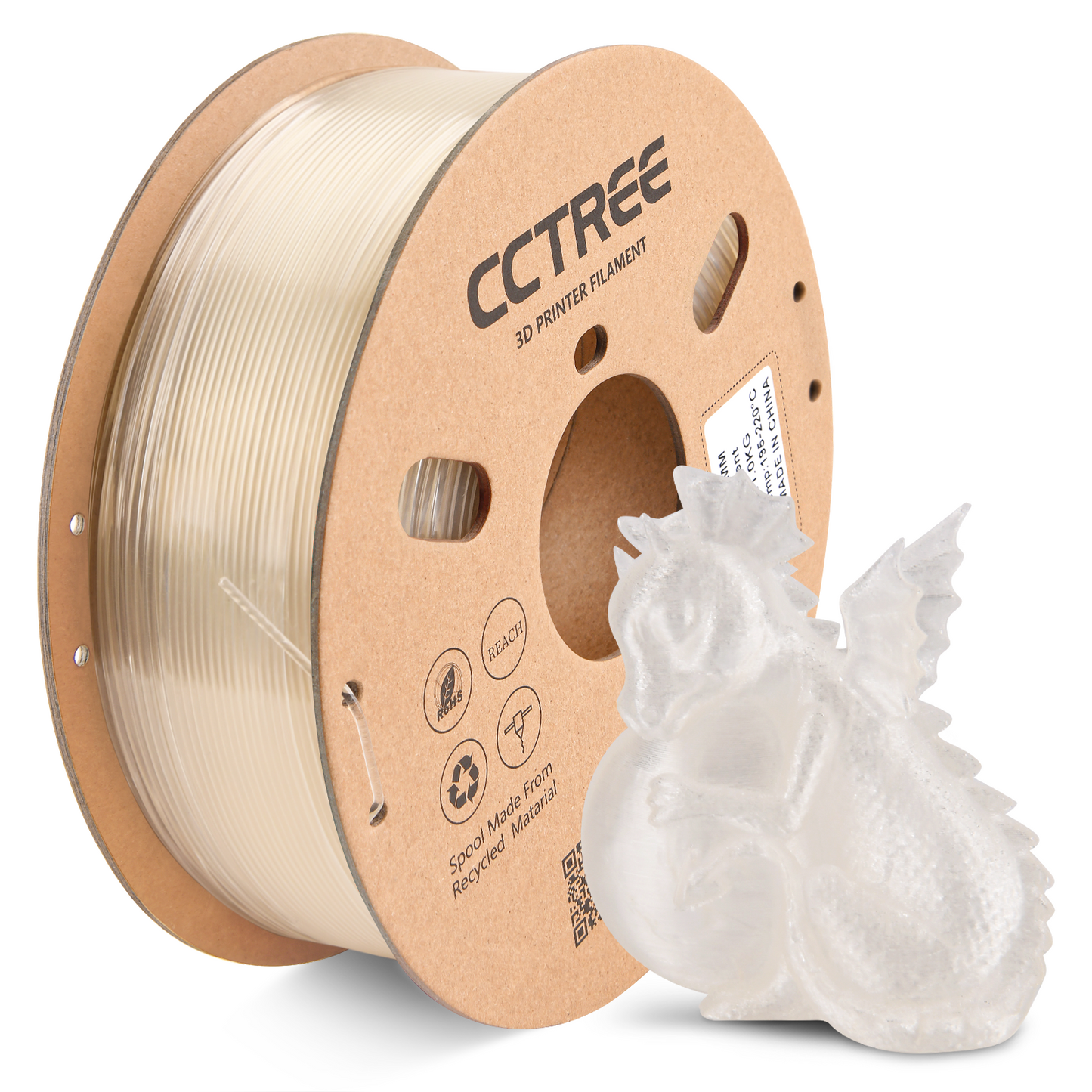


3DSaga PC (Polycarbonate) Filament Features
Polycarbonate (PC) filament is known for its incredible strength and heat resistance, making it ideal for demanding applications.
PC filament has a high impact strength and can withstand significant mechanical loads without breaking.
Some of the key properties of PC filament include:
High impact strength: PC filament is extremely durable and can withstand high impacts, making it perfect for functional parts and prototypes.
Heat resistance: With a glass transition temperature of around 150°C, PC filament can withstand high temperatures, making it ideal for applications that require thermal stability.
Transparency: PC filament is naturally transparent and has excellent light transmission, making it suitable for applications where clarity is important.
Flexibility: PC filament can be bent at room temperature without breaking, giving it a unique combination of strength and flexibility.
PC filament is known for its high quality and reliability. It is a preferred choice in many industries, including automotive, aerospace, and electronics, due to its excellent mechanical properties and resistance to thermal deformation. Users have reported that PC filament produces smooth and precise prints with minimal warping when printed under the right conditions. Additionally, PC filament is often reinforced with carbon fiber or fiberglass to increase its strength and durability.
Applications of PC Filament
PC filament is very versatile and can be used for a variety of applications:
Safety equipment: Due to its high impact strength and clarity, PC is used to make bulletproof glass, safety glasses, and other safety components.
Automotive and aerospace parts: PC's heat resistance and durability make it ideal for under-the-hood components and external parts in automobiles and aircraft.
Electronics housings: The material's strength and thermal properties are advantageous for electronics housings and parts that must withstand heat and protect sensitive components.
Lighting Fixtures: PC's optical clarity allows for the creation of light covers, lenses, and fixtures that require a combination of transparency and impact resistance