


 BUY NOW AND GET FREE SHIPPING
On all orders over 500,- (DK only)
BUY NOW AND GET FREE SHIPPING
On all orders over 500,- (DK only)
 1-2 DELIVERY DAYS
Order before 12 noon and we will ship the same business day
1-2 DELIVERY DAYS
Order before 12 noon and we will ship the same business day
 14 DAY RETURN RIGHT


Couldn't load pickup availability
1 in stock : 1-2 weekdays


Free shipping on orders over 500 DKK in DK

Ships from Roskilde DK

Local service center in Roskilde

1 year warranty

Customer Service
Email: hello@3dsaga.com
Phone: +45 69 15 31 11
All weekdays from 10:00 - 15:00
Showroom:
Monday - Thursday: 09:30 – 15:30
Friday: 09:30 – 15:00


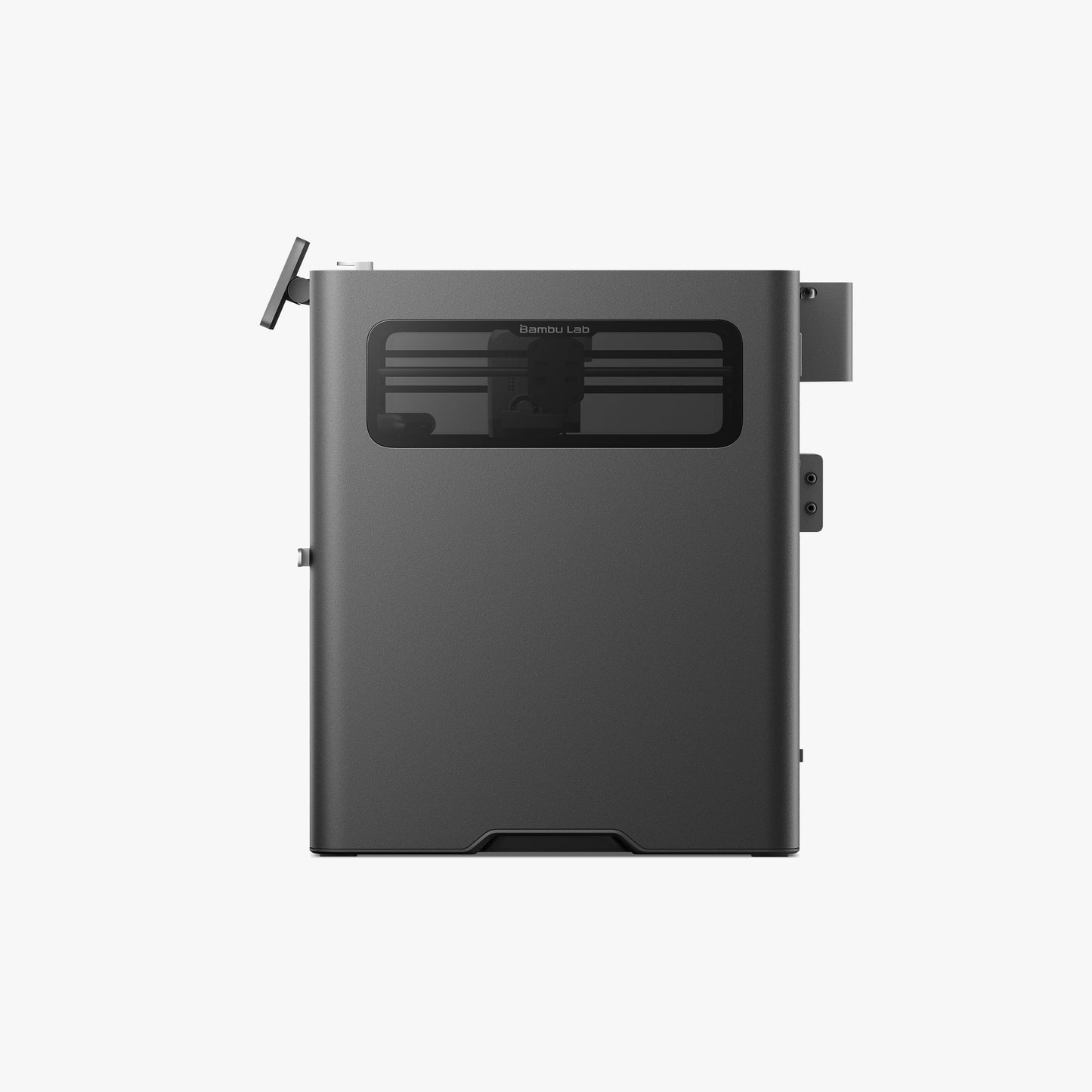
Bambu Lab X2D
Product Features
- Dual Nozzle 3D Printing
- Faster multi-color printing and easier removal of support structures
- 300 °C nozzle and 65 °C active chamber heating
- Extruder with closed-loop servo motor
- AI detection of the entire filament path
- Print Volume: 256 × 256 × 260 mm³
- Voltage Range: 200–240 V
- To connect more than two AMS (including AMS 2 Pro, AMS HT), a 4-in-1 PTFE adapter (FAZ013-N) is required.
* Cybersecurity in accordance with EU RED Article 3.3(d)(e) and ETSI EN 303 645 V2.1.1:2020. Learn more.

Bambu Lab X2D
Xcellence made simple

Why choose Bambu Lab X2D
- Dual Nozzle – makes multi-material simple
- Servo Extruder – smooth surfaces at full speed
- Dual Air Intake for Cooling – sharp details
- Active Heating – stronger parts
- Adaptive Calibration – consistent precision
- AI Monitoring – your built-in safety
- Certified Emissions – designed for home

Dual Nozzle System
Stop overthinking support – start removing it easily and cleanly.
The main nozzle prints the object itself. The secondary nozzle handles support¹. The X2D leaves all the tedious support work to an auxiliary nozzle with its own material. Encompass steep overhangs, fabric-like folds, and internal channels with full support – then remove it cleanly and easily.


More color, more detail, and more fun
Hard and soft – in one print
Combine PLA and TPU in the same model. Create bags, grips, and protective edges ready for use straight from the print bed.

Change colors instantly
The dual nozzles switch in a split second. Get faster color changes, cleaner transitions, and far less waste².

Finer. Sharper. True to design.
Press. Switch. Done.
Unlike traditional motor-driven systems, the X2D features a gear and release mechanism integrated into the printhead. The nozzle change arm activates the release, which drives an internal gear system and switches the nozzle. No extra weight – just a clean and precise switch.
A lighter printhead means less inertia and fewer vibrations. Even at full speed, surfaces remain flawless – all the way up.

Cool it down – before gravity makes it sag.
Two air intakes are always better than one. Newly extruded filament is soft, but the X2D immediately flushes the chamber with cool air from dual intakes on the left and right sides. This constant air exchange stabilizes each layer for low-temperature filaments like PLA and cools each line at precisely the right time.
Even at difficult angles, overhangs remain sharp, and bridges stand clean and stable.

It's not enough for it to be hot – the heat must be evenly distributed.
The X2D combines a 300 °C nozzle with an actively heated chamber at 65 °C – warm enough for most engineering filaments like ABS, ASA, and nylon.
But it's not just about temperature – the active chamber distributes heat evenly, so layers bond strongly from edge to edge. Your larger technical prints will be both strong and flat.

Calibration that adapts to wear and material changes
Most printers calibrate flow with a single K-factor and use it in all situations. Bambu Lab does not. Flow Dynamics Calibration³ builds a time-varying, non-linear model of your entire extrusion system.
So whether there are small residues in the nozzle, gradual wear on the nozzle, or slightly damp filament, the system detects it, calibrates, and compensates automatically. Smooth surfaces and sharp edges are no longer a matter of luck – they become repeatable.

PMSM Servo System: Smoother surfaces start inside the extruder
Extruder gears "gnaw" at the filament as it feeds, creating small pressure fluctuations that can be seen as fine lines on the surface. Exclusive to Bambu Lab, the PMSM servo system⁵ counteracts this in real-time. With resistance and position measurements at 20 kHz, the system continuously adjusts the electromagnetic torque, smoothing out every microsweep before it reaches the surface.
Consistent surface quality
Extrusion pressure is precisely controlled, so flow remains stable, and the surface becomes clean and even – print after print.

Compensation provides sharp corners and clean details
Ringing and ghosting can blur edges at high speed. Active vibration compensation eliminates these effects in real-time – so edges remain sharp, no matter how fast you print.


