


 BUY NOW AND GET FREE SHIPPING
On all orders over 500,- (DK only)
BUY NOW AND GET FREE SHIPPING
On all orders over 500,- (DK only)
 1-2 DELIVERY DAYS
Order before 12 noon and we will ship the same business day
1-2 DELIVERY DAYS
Order before 12 noon and we will ship the same business day
 14 DAY RETURN RIGHT


Couldn't load pickup availability
20 in stock : 1-2 weekdays


Free shipping on orders over 500 DKK in DK

Ships from Roskilde DK

Local service center in Roskilde

1 year warranty

Customer Service
Email: hello@3dsaga.com
Phone: +45 69 15 31 11
All weekdays from 10:00 - 15:00
Showroom:
Monday - Thursday: 09:30 – 15:30
Friday: 09:30 – 15:00

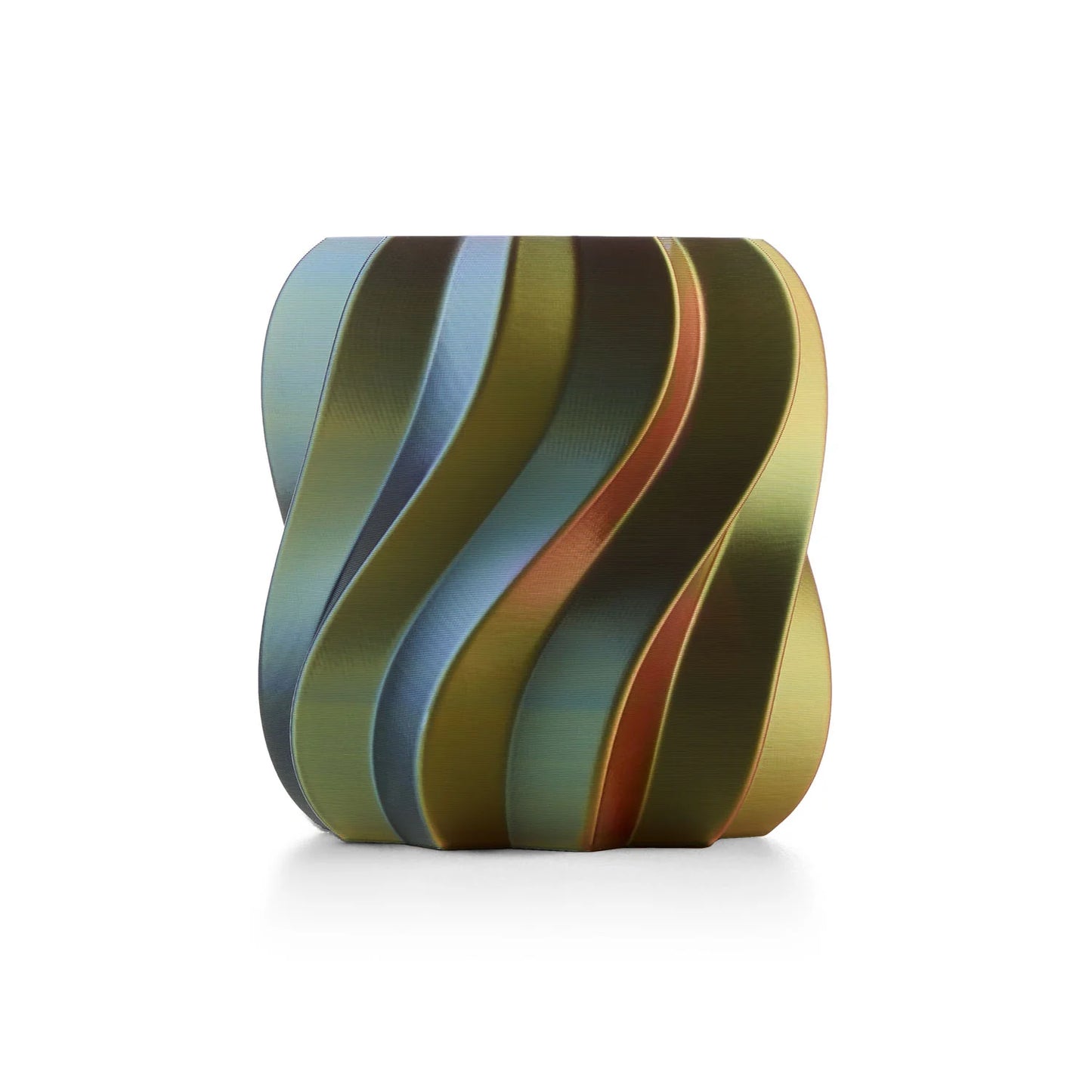


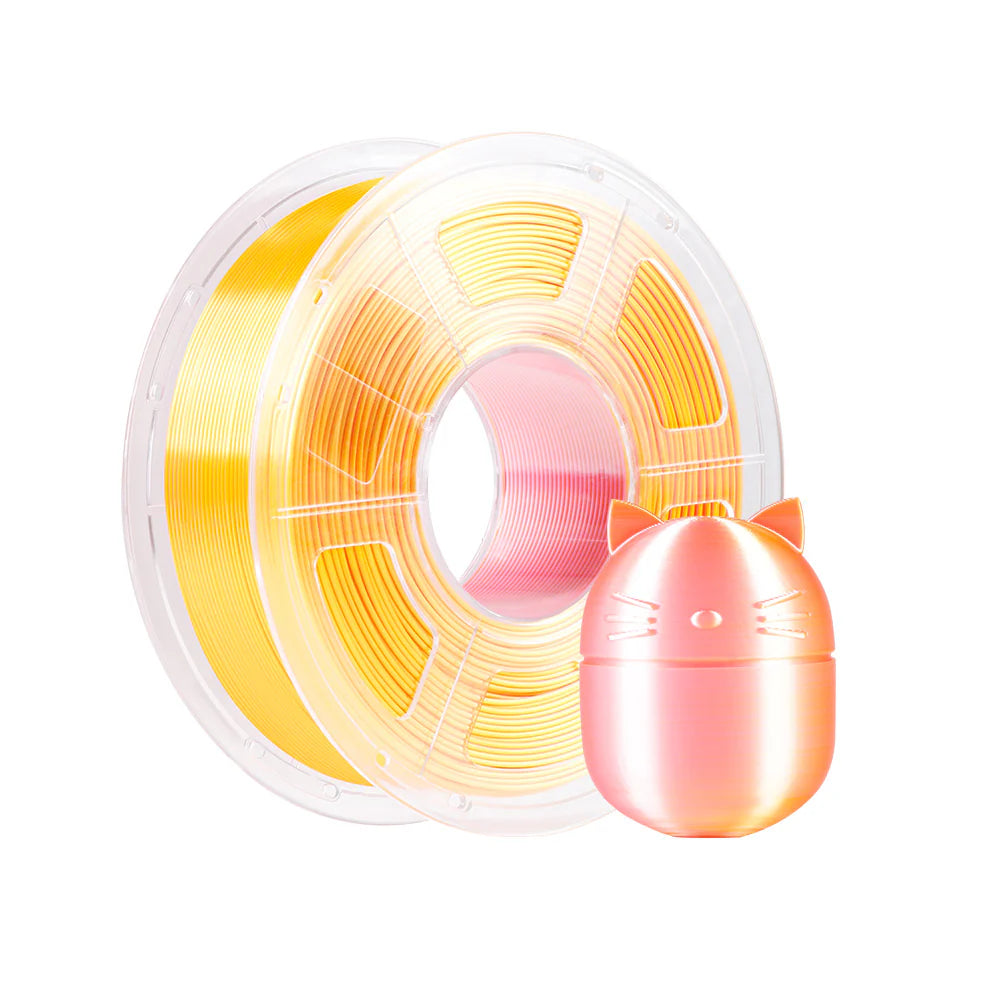

ANYCUBIC PLA Silk Dual / Tri-Color Filament
1.75mm 1kg

Silky smooth surface – vibrant color shift – compatible with most 3D printers
Experience impressive shine and color depth with ANYCUBIC's PLA Silk Dual- and Tri-Color filament. The silky-smooth finish gives your prints an exclusive look, ideal for models, figurines, decorations, and visual prototypes. The multi-colored design creates natural color transitions without the need for multi-extrusion.
Features:
-
Silky smooth finish: Provides a smooth and shiny look directly from the printer
-
Color-shift effect: Dual and tri-colors create eye-catching visual results
-
Compatibility: Works with all FDM 3D printers that support 1.75 mm filament
-
Excellent adhesion: Optimal layer bonding and good first-layer adhesion on a heated build plate
-
Easy to print: Low warping, minimal clogging, and stable extrusion

Silky Smooth Surface with a Radiant Glow
Utilizing an advanced dual-/triple-extrusion production process, Anycubic PLA Silk Dual-Color and Tri-Color filament combines two or three colors throughout the entire spool. This provides a smooth color transition and a silk-like texture directly during printing.
The finished models feature a glossy, lustrous surface and an impressive color effect that catches the light and adds visual depth – perfect for decorative prints and display models.

Fully compatible with most 3D printers
Its high versatility enables optimal printing results – regardless of the 3D printer model you use.

First-class adhesion – minimal warping and maximum stability
The strong adhesion of Anycubic PLA Silk Dual- or Tri-Color filament significantly reduces problems such as warping, shrinkage, and corner lift. The result is a high success rate in printing – even on large or detailed models.
Experience a smooth and reliable printing process with a beautiful finish and fewer errors.

Environmentally friendly and biodegradable material
PLA is made from lactic acid, which is extracted through starch fermentation of corn (or other plants) during wet milling. This makes PLA a biodegradable and environmentally friendly filament choice, ideal for those who want sustainable 3D printing solutions without compromising on quality.

No more air bubbles and clogging
The filament is supplied in recyclable vacuum bags and sealed with desiccant, which effectively protects against moisture. This prevents the formation of air bubbles and ensures smooth and stable extrusion during printing – for fewer errors and more consistent results.

Colors

Model Print with Anycubic PLA Silk Dual/Tri-Color

Technical specifications – Anycubic PLA Silk Dual / Tri-Color
| Parameter | Value |
|---|---|
| Net weight | 1 kg / roll |
| Diameter | 1.75 mm |
| Diameter tolerance | ± 0.05 mm |
| Gross weight | 1.26 kg |
| Density | 1.25 g/cm³ |
| Tensile strength | 60.6 MPa |
| Elongation at break | > 6.3 % |
| Flexural strength | 65 MPa |
| Flexural modulus | 2400–2800 MPa |
| Young's modulus | 2760 MPa |
| Izod impact strength | 33 KJ/m² |
| Melting point | 164 °C |
| Melt flow index | 9 g / 10 min |
| Heat distortion temperature | 53 °C |
How to install the filament – step by step
-
Mount the spool on the printer's spool holder and preheat the nozzle to the recommended temperature.
-
Cut the filament tip at an oblique or sharp angle (spire shape) for easier feeding.
-
Feed the filament into the extruder and feeding tube, and manually push it forward until it begins to melt and flow out through the nozzle.