


 BUY NOW AND GET FREE SHIPPING
On all orders over 500,- (DK only)
BUY NOW AND GET FREE SHIPPING
On all orders over 500,- (DK only)
 1-2 DELIVERY DAYS
Order before 12 noon and we will ship the same business day
1-2 DELIVERY DAYS
Order before 12 noon and we will ship the same business day
 14 DAY RETURN RIGHT


Couldn't load pickup availability
10 in stock : 1-2 weekdays


Free shipping on orders over 500 DKK in DK

Ships from Roskilde DK

Local service center in Roskilde

1 year warranty

Customer Service
Email: hello@3dsaga.com
Phone: +45 69 15 31 11
All weekdays from 10:00 - 15:00
Showroom:
Monday - Thursday: 09:30 – 15:30
Friday: 09:30 – 15:00


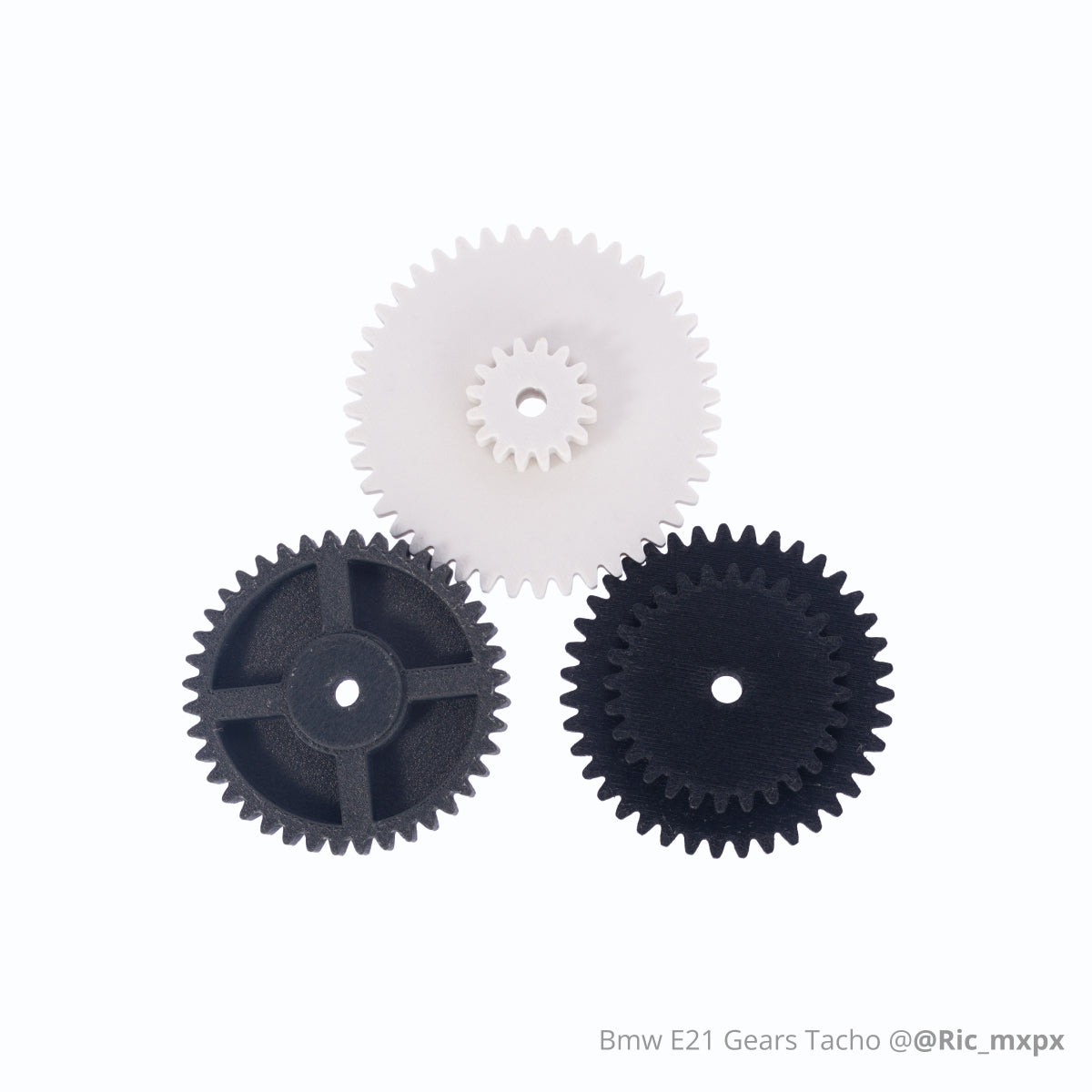
Bamboo Lab PA6-GF
Product features
-
Built to last
-
Dimensional stability
-
Outstanding thermal properties
-
Chemical resistance
-
Smooth surface and multiple colors
-
Diameter: 1.75mm +/- 0.03mm
Precautions for use
-
0.2mm nozzle is not compatible
-
Stainless steel nozzle not recommended
-
Compatible with AMS
-
Not compatible with AMS Lite
-
Printers with enclosure are required
-
Dry the filament before use
-
Must be dried before use
Note
PA6-GF in the colors yellow, lime and brown has been discontinued and will not be replenished.

Bambu PA6-GF – Glass Fiber Reinforced Nylon
Bambu PA6-GF, also known as Nylon 6 with glass fiber, is among the most advanced high-performance, engineering plastics on the market. It is designed to deliver exceptional strength, durability and dimensional stability. Compared to other top-of-the-line engineering filaments, PA6-GF is also a more cost-effective choice.
Built to last
Bambu PA6-GF is extraordinarily strong and robust thanks to its glass fiber reinforcement, making it a perfect choice for prints that need to withstand heavy use and be resistant to bending and breaking.
- Note: The printed part achieves improved toughness after absorbing moisture.

Dimensional stability
PA6-GF has an impressively high dimensional stability due to the glass fiber reinforcement, and the filament has significantly less tendency to twist and warp compared to standard PA filaments. The result is precise print dimensions – even in complex and detailed geometries.

Outstanding thermal properties
PA6-GF has a high heat deflection temperature (HDT) and excellent mechanical stability, which enables the filament to maintain its strength properties at high temperatures. This makes it particularly suitable for demanding industrial, automotive and car-related applications.

| Filament type | PLA Basic | ABS | Normal PA (Nylon) | PC | PA6-GF | PA6-CF | PAHT-CF | PET-CF |
|---|---|---|---|---|---|---|---|---|
| Heat deformation resistance / HDT (°C at 0.45 MPa) | 57 °C | 87 °C | 89 °C | 117 °C | 182 °C | 186 °C | 194 °C | 205 °C |

Chemical resistance
PA6-GF has excellent resistance to chemicals, oils and many types of solvents, ensuring long-lasting performance – even in demanding and challenging environments.

Smooth surface and multiple colors
Bambu PA6-GF filaments are compatible with the Bambu AMS system and therefore support multi-color printing. The special surface structure also helps to erase visible layer lines, resulting in a smoother and more uniform surface quality.

PA6-GF Hex Code Table
| Color | Hex Code | Display |
| White | #EAEAE4 | |
| Yellow | #FFCE00 | |
| Lime | #C5ED48 | |
| Blue | #75AED8 | |
| Orange | #FF4800 | |
| Brown | #5B492F | |
| Gray | #353533 | |
| Black | #000000 |
RFID for intelligent printing
All printing parameters are embedded in an RFID chip, which can be automatically read via the Bambu AMS (Automatic Material System) system.
Insert the filament and print immediately!
No manual and time-consuming settings – and no unnecessary setup steps.

Comparison of parameters
Read more and see a comparison of the different filaments in the Bambu Filament guide >>
| Parameters | PA6-GF | PA6-CF | PAHT-CF |
|---|---|---|---|
| Composition | PA6, fiberglass | PA6, carbon fiber | PA12 + other long-chain PA types, carbon fiber |
| AMS compatibility | YES | NO | YES |
| Drying before use | Required | Required | Required |
| Print speed | < 130 mm/s | < 100 mm/s | < 100 mm/s |
| Printer type | Cabinet/Enclosure | Cabinet/Enclosure | Cabinet/Enclosure |
| Toughness (impact strength – XY, dry state) | 27.2 kJ/m² | 40.3 kJ/m² | 57.5 kJ/m² |
| Toughness (impact strength – XY, moist condition) | 55.8 kJ/m² | 57.2 kJ/m² | 62.3 kJ/m² |
| Strength (flexural strength – XY, dry condition) | 120 MPa | 151 MPa | 125 MPa |
| Strength (flexural strength – XY, moist condition) | 71 MPa | 95 MPa | 115 MPa |
| Layer strength (flexural strength – Z, dry state) | 51 MPa | 80 MPa | 61 MPa |
| Layer strength (flexural strength – Z, moist condition) | 33 MPa | 45 MPa | 49 MPa |
| Stiffness (flexural modulus – XY, dry state) | 3670 MPa | 5460 MPa | 4230 MPa |
| Stiffness (flexural modulus – XY, moist condition) | 2120 MPa | 3560 MPa | 3640 MPa |
| Layer adhesion (impact strength – Z, dry state) | 4.1 kJ/m² | 15.5 kJ/m² | 13.3 kJ/m² |
| Heat resistance (HDT at 0.45 MPa, dry condition) | 182 °C | 186 °C | 194 °C |
| Saturated water absorption rate / % (25 °C, 55% RH) | 2.56% | 2.35% | 0.88% |
| Max. water absorption rate (25 °C, 55% RH) | 2.56 | 2.35 | 0.88 |
| Water absorption rate at saturation / % (25 °C, 55% humidity) | 2.56 | 2.35 | 0.88 |
Accessory compatibility
| Accessories / Compatibility | Recommended | Not recommended |
|---|---|---|
| Building board | Smooth PEI sheet, Textured PEI sheet | Cool Plate SuperTack |
| Hotend | Hotend with hardened steel 0.4 mm / 0.6 mm (recommended) / 0.8 mm | Hotend with stainless steel nozzles – all sizes |
| Glue | Bamboo Glue Stick | Bamboo Liquid Glue |
| AMS & AMS Lite | AMS | AMS Lite |
Recommended print settings
| Parameters | Value |
|---|---|
| Drying settings before printing | 80°C for 8–12 hours |
| Print and storage container humidity | < 20% RH (sealed with desiccant) |
| Nozzle temperature | 260–290°C |
| Building board temperature (with glue) | 80–100°C |
| Print speed | < 130 mm/s |
Physical properties
| Property | Value |
|---|---|
| Density | 1.14 g/cm³ |
| Vicat softening point | 210 °C |
| Heat deformation resistance (HDT) | 182 °C |
| Melting temperature | 219 °C |
| Melt Index | 9.0 ± 0.8 g/10 min |
Mechanical properties
| Property | Value |
|---|---|
| Tensile strength | 75 ± 6 MPa |
| Elongation at break | 3.9 ± 0.8% |
| Flexural modulus | 3670 ± 140 MPa |
| Bending strength | 120 ± 6 MPa |
| Impact strength | 27.2 ± 2.2 kJ/m² |
Download
Printing tips
-
Drying before printing:
Bambu PA6-GF must be dried properly before printing. Recommended drying is:-
80 °C for 8–12 hours in a hot air dryer, or
-
90–100 °C for 10–12 hours on the build plate.
⚠️ Do not exceed 100°C as the coil may deform or melt.
For more details, see: Printing tips for Engineering materials on WIKI.
-
-
Storage during printing:
To prevent moisture absorption, it is recommended to use an airtight container of desiccant during printing.
See details at: Printing tips for Engineering materials on WIKI. -
Minimizing warping:
Avoid printing large models with high infill. Use printers with enclosures and make sure the build plate is properly glued for better adhesion before printing. -
For better printing results:
See additional tips at: Printing tips for Engineering materials on WIKI.
Finishing tips
-
Removing supports:
It is recommended to remove support structures within 2 hours of printing to prevent them from sticking after moisture absorption. If they are stuck, the model can be dried for easier removal. -
Post-hardening / annealing:
Placing the printed part in a convection oven at 80–130 °C for 5–12 hours can increase strength and stiffness.
⚠️ Effectiveness depends on model structure, size and conditions – some models may deform after post-curing.
See details at: Work after Printing Finished on WIKI.
Package contents
